The first impression factor: How interior design influences user experience
First impressions are felt before they’re understood. They emerge through the way a space unfolds – how light lands, the textures that add depth and the subtle cues that make you feel oriented and at ease.
At ESa, our in-house interior designers see those early design decisions as opportunities to influence comfort, trust and performance across every sector.
In this first of two installments, ESa’s interiors team described how interiors set the tone, both emotionally and physically. Drawing from work across healthcare, hospitality, education, residential, community + arts and commercial projects, the team returns to the same goal: create spaces that feel right to the people who use them.
Setting the tone
Senior Interior Design Manager Kearra Barkley described first impressions as the emotional response people have “before they even have time to notice the details.” That instinctive reaction – whether comfortable or uncomfortable, calm or energizing – sets expectations immediately.
In healthcare environments, those expectations carry significant weight. Senior Interior Design Manager and Principal Tom Bauman called interior design “everything” because it “sets the tone for the rest of the experience for the user,” especially for patients and families who arrive already carrying stress. He pointed to the power of interior architecture to help people feel supported right away, including “ease of wayfinding to not create additional stress,” along with an environment that feels “welcoming and non-threatening.”
Interior Designer Hayleigh Engelhardt views each first impression as a chance to build trust through the senses. “[First impressions are] especially powerful in healthcare environments,” where design can “reduce anxiety while inspiring optimism” through “thoughtful space planning, color and texture,” helping people feel cared for “before a single interaction with a staff member.”
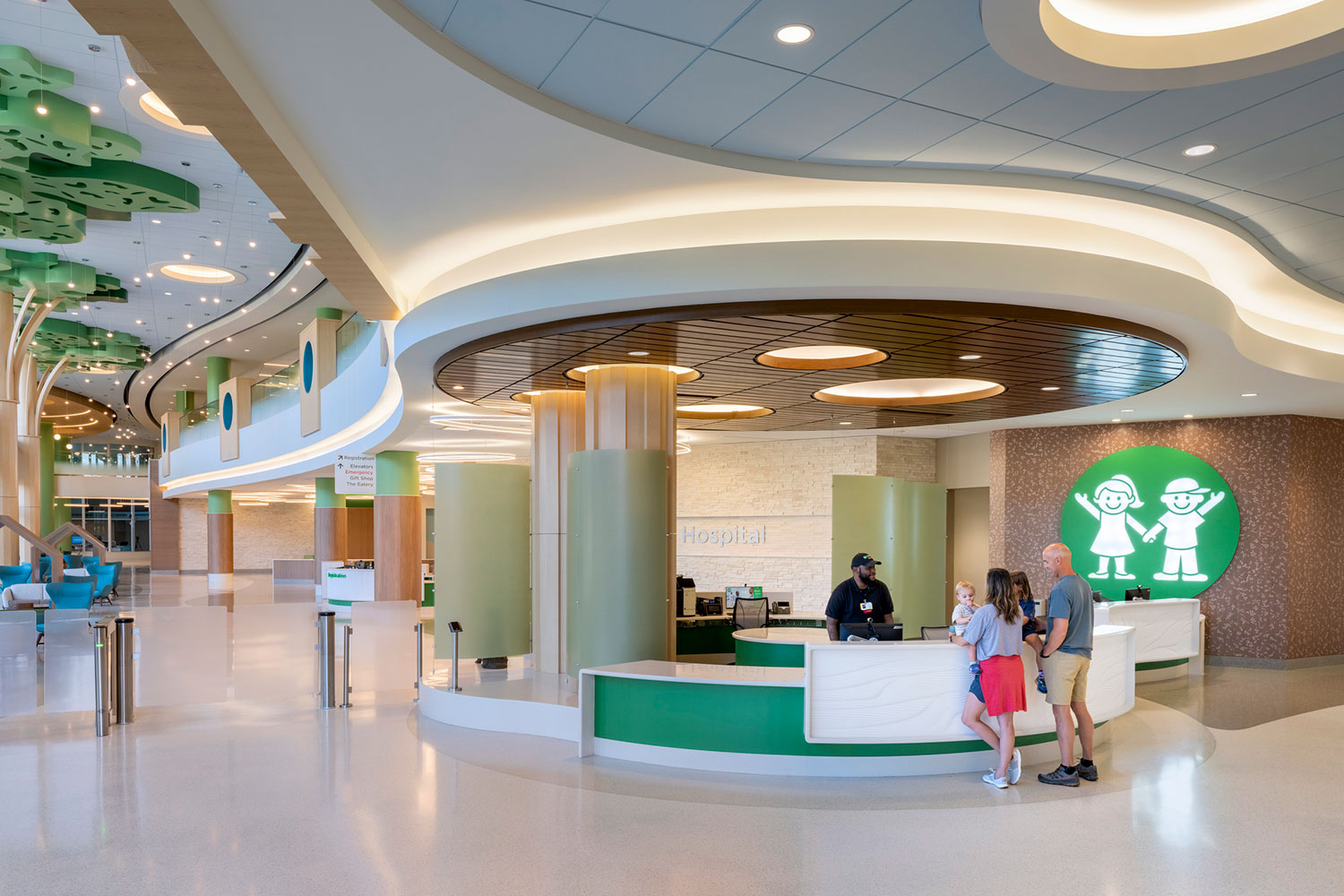
Children’s Healthcare of Atlanta Arthur M. Blank Hospital
In hospitality, the same principle applies with different stakes. “You only have one opportunity to truly wow a guest,” said Senior Interior Design Manager Jenny Harlan. For her, the goal is to craft “moments of discovery and layered first impressions, from arrival through each public amenity and ultimately into the guest room.”
Senior Interior Design Manager Sarah Woodard expanded that idea beyond what guests see to what they feel. First impressions, she noted, begin at the threshold. “At the transition between the exterior and interior architecture, or the point of entry into the lobby, I ask, ‘Is it cohesive? Are they telling the same story?” She also mentioned sensory elements that immediately influence experience, including “lighting/lighting levels, music choice/levels, acoustics and smells,” and whether they “support the narrative story.”
Across ESa’s sectors, first impressions are the foundation for how people understand and experience a space.
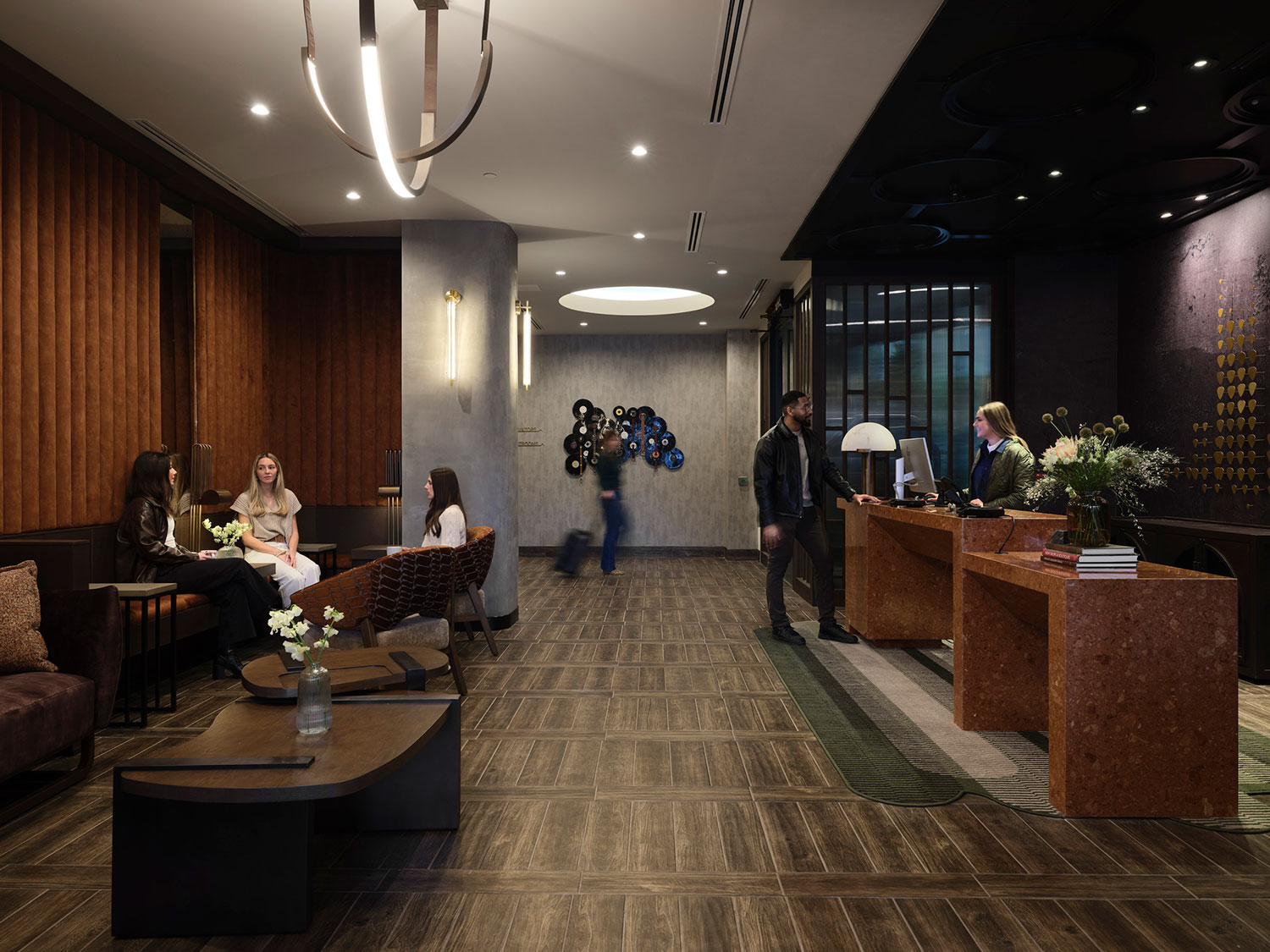
Motto by Hilton
Storytelling that feels authentic, not forced
Across every sector, the team’s process begins with listening. Authentic spaces, they agreed, come from understanding a client’s identity, values and culture, including what may not be explicitly stated.
Barkley framed storytelling as something people feel rather than something they’re told. It starts with “asking questions and truly listening.” From there, she said, the story comes through “light, scale, color, proportion, materials and flow,” creating a narrative that is “experienced rather than explained.” ESa’s renovation of McGuffey Hall at St. Paul Christian Academy put that approach into practice. The team rearranged the floor plan to better support how students learn and interact today, then used finishes to mirror the school’s warm personality. The design comes through in a “creative use of school colors” and a student-focused play-and-learning space featuring a “custom tree with seating cubbies,” reinforcing “community, curiosity and growth.”
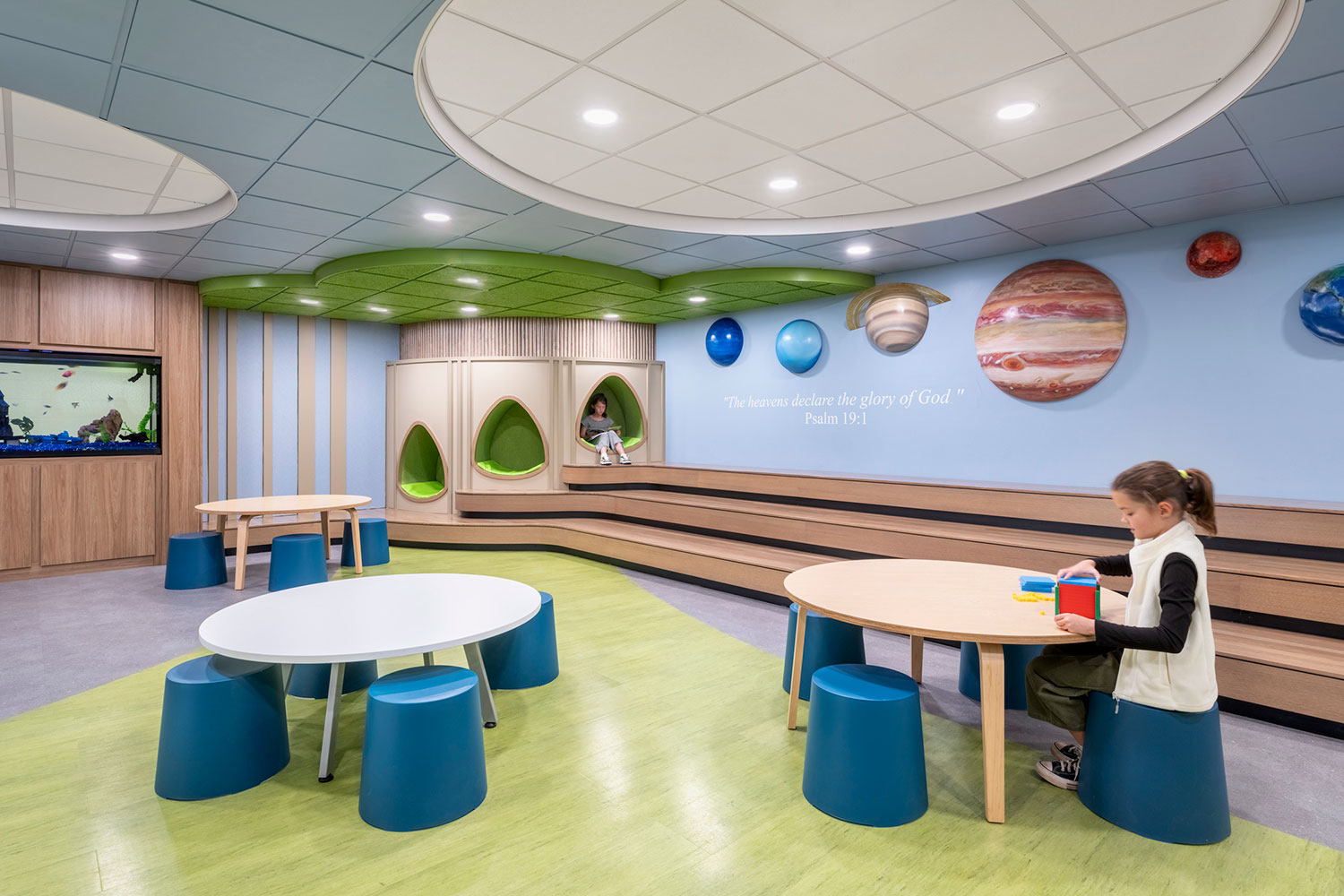
St. Paul Christian Academy – McGuffey Hall
Engelhardt described a designer’s role as translating a client’s vision into the physical environment. “Weaving a client’s story into an interior environment means listening deeply and translating their mission into a space that feels honest, intentional and human,” she said. For example, the mission of the National Center for Opioid Research & Clinical Effectiveness (NCOR) in Little Rock, Arkansas, is focused on helping communities understand the effects of the opioid crisis on fetuses, newborns and developing children, meaning ESa’s design needed to balance gravity with hope. The interior concept centered on “magnifying hope,” using “light, scale and layered textures” to create a compassionate environment “the moment they entered the space.”
Senior Interior Design Manager and Principal Alana Morris pointed to listening as a strategic advantage, especially in community-sensitive work. “The ability to listen attentively is among the most valuable assets you can offer a client,” she said. On Angel Medical Center, a replacement hospital in rural North Carolina, the interior concept “Profound Heritage” drew from local identity and local context – “brick accents inspired by the town square buildings, blue hues inspired by sapphires from the mining community and the Blue Ridge Mountain landscape and plaid fabric accents representing its Scottish heritage.”
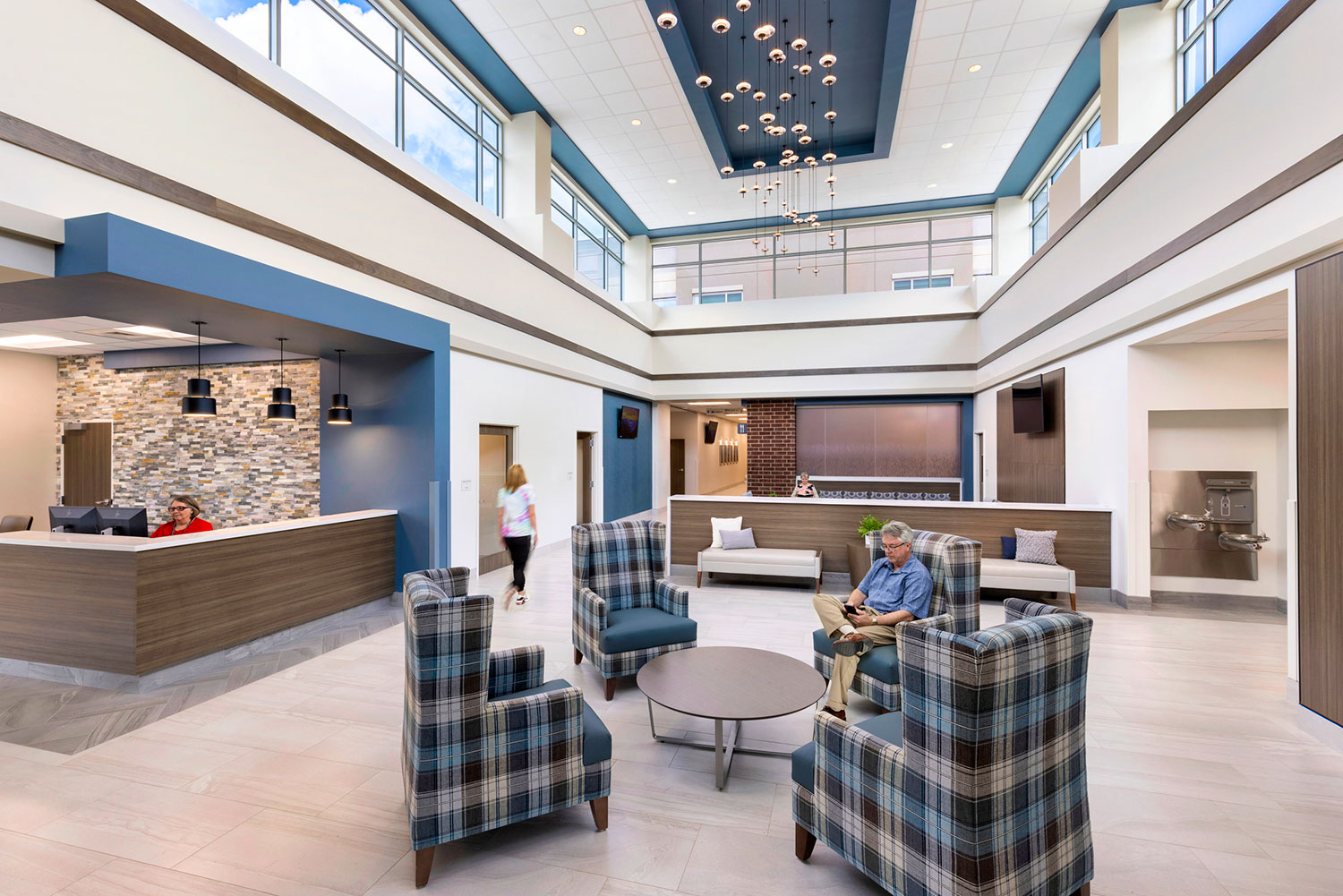
Angel Medical Center
Designing a sense of place
In hospitality and adaptive reuse, research plays an equally important role, particularly when the goal is to create a sense of place that feels earned.
“The first thing is to research the site/building history … Research the neighborhood,” Woodard said. She aims to “find something that tells the locals that you put in time to get to know them,” while helping guests connect to a place in a way that feels specific. Sewanee Inn captures what that looks like when the research is done well. The campus’s Gothic Revival architecture informed the narrative, and the team specified white oak flooring sourced from the university’s forest stewardship. In the library, they “purchased vintage books from all authors that were studied in English/Writing programs.” The same approach shows up at The Lodge at Fall Creek Falls, a modern interpretation of rustic design with “textures and colors reflecting the shadowy nature of trees in the surrounding forest,” and elements that “bridge the divide between the built and native environments.”
Senior Interior Design Manager Leslie Ann Wilson advised that designing a sense of place is done best with restraint. “Subtly incorporate the aesthetic narrative” through “color; pattern; texture; and design motifs in lighting, art and furniture.” That approach guided the interiors at Hotel Eastport in The Villages, Florida, where a “very vibrant narrative” draws from the area’s mid-century modern town center and nearby dragon boat races. The palette and patterns were selected with intention. “Blues, orange, warm wood tones and geometric patterns” appear in everything from an abstract water illustration in the lobby floor to corridor accents and even “the molding profiles in the custom millwork.”
Harlan cited The Bristol Hotel as a different placemaking challenge, rooted in preservation and reinvention. ESa transformed a “condemned historic office building into a luxury boutique hotel” while maintaining the building’s character, creating an experience that feels grounded in history but relevant for today. For Harlan, that blend of old and new is part of what makes the work meaningful: it “attracts new guests and locals,” helping “transform the downtown area.”
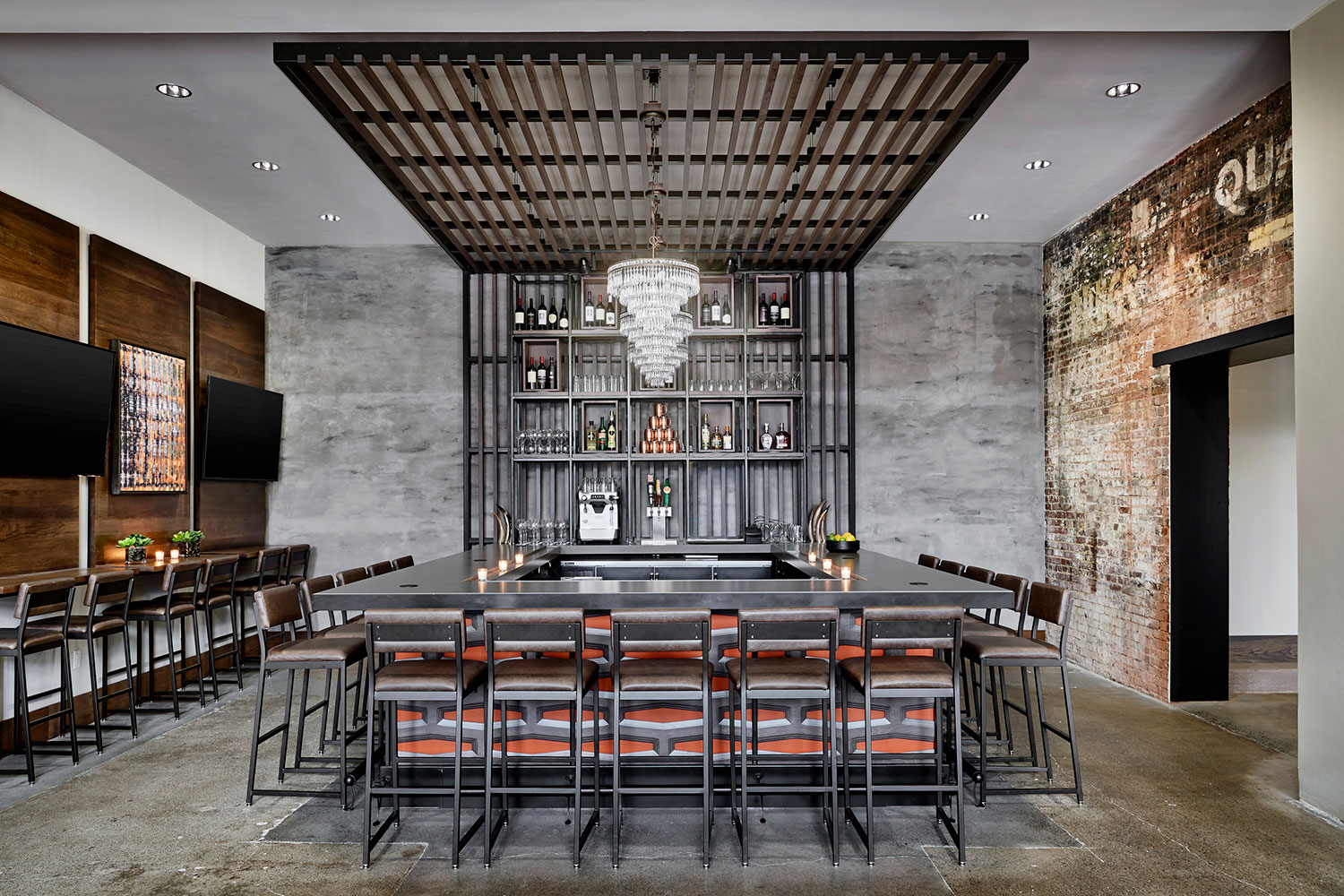
The Bristol Hotel
Interior Designer Madison Underwood offered another perspective: keep it present, but avoid making it literal. “When I am trying to integrate the client’s story or concept into my designs, I never want to do it so directly,” she said. She looks for “nods toward the background or identity,” often through artwork, signage or select finishes. On the Buddy Lee Attraction/Capitol Records renovation project, she said, “There is such a rich history in this building, and we honored the history and the program through artwork and memorabilia throughout the space.” Because the space supports a music business program, the interior design includes “subtle nods to music in the interior architecture itself.”
Across projects, the common thread is restraint and intention. The story is present, and it earns its place.
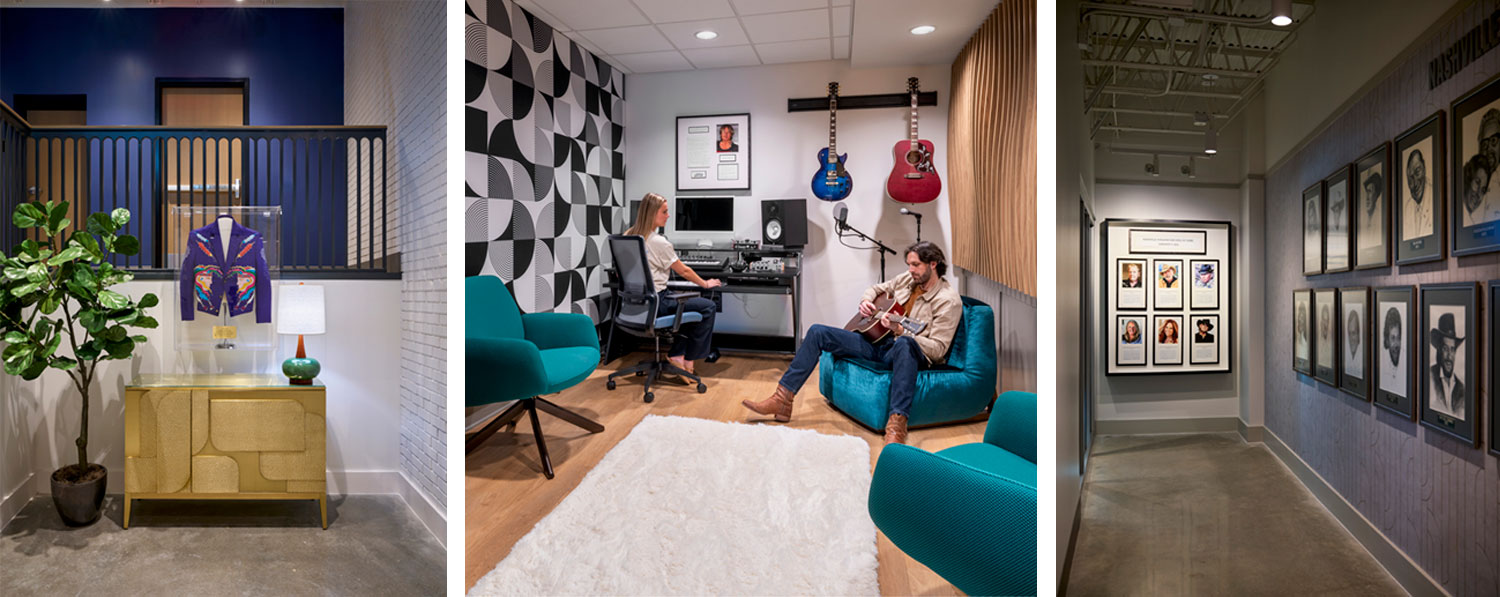
Belmont University – Buddy Lee Attraction/Capitol Records Renovation
From first impression to lasting impact
ESa’s interior designers focus on what people feel, how they move and what they remember. Then, they translate those moments into spaces that perform day after day. Across healthcare, hospitality, education, residential, community + arts and commercial, the team returns to the same fundamentals: listen closely, create a sense of place and let the details do the storytelling.
If you’re planning a new project or renovations, ESa’s interior designers can help define the experience you want people to have and carry it through every decision – from first impression through final finish. Connect with ESa to start the conversation.