Designing Music City’s next note: A closer look at performing arts education
Ben Metz, AIA, NCARB, LEED® AP
Randy Nale, AIA
As Nashville grows, so does the responsibility to protect what makes its creative landscape special. Great design doesn’t tell artists how to create. It sets the stage for educators, musicians and engineers to do their best work.
At ESa, our partnership with Belmont University demonstrates how thoughtful architecture can honor Nashville’s rich musical history while preparing students to shape the future of music. Across performance venues, recording environments and academic spaces, design becomes the bridge between tradition and innovation, supporting how students learn and collaborate.
Built to perform, designed to inspire
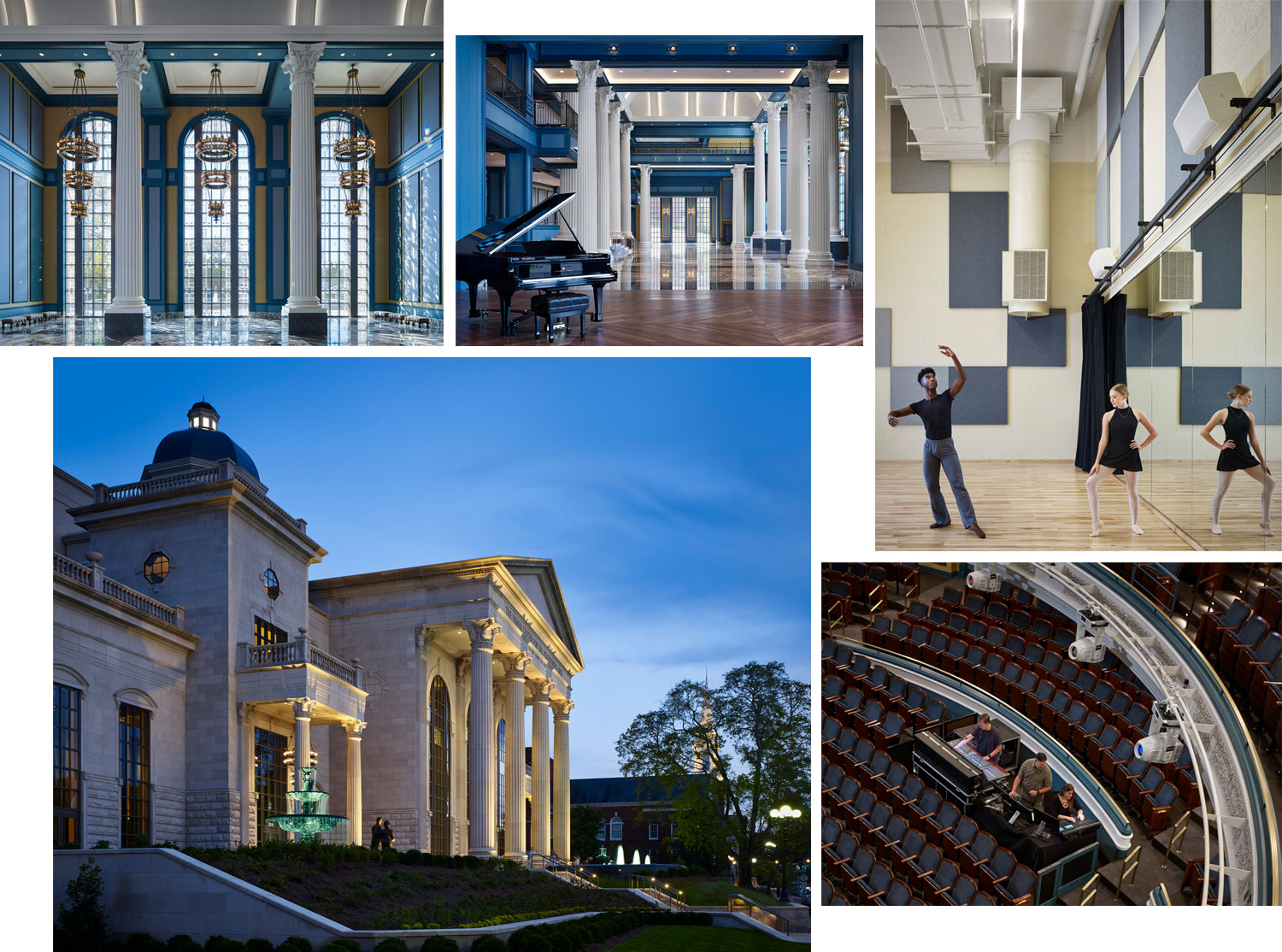
The award-winning Fisher Center for the Performing Arts stands as a testament to our philosophy. As the third phase of Belmont’s Performing Arts District, this multi-use hall serves musical theatre, opera, orchestra, dance and choral performances.
Designing the main auditorium and recital halls meant balancing world-class performance requirements with spaces that are approachable and functional for students and faculty. Classical architecture, combined with modern technical systems including a full fly tower, wing space and variable acoustics, created an inspiring environment where performers and audiences connect. Known worldwide as the home to Christmas at Belmont, the university’s annual showcase featuring more than 600 student musicians from the College of Music and Performing Arts, the hall now hosts the nationally televised CMA Country Christmas, known for its star-studded cast of musicians.
The center’s grand lobby was also designed to serve a dual purpose as a 900-seat event space, demonstrating how multifunctional design supports both educational and community engagement. The space is now the largest gathering area on campus, regularly welcoming the public and serving as a venue for large-scale university events.
Keeping music on Music Row
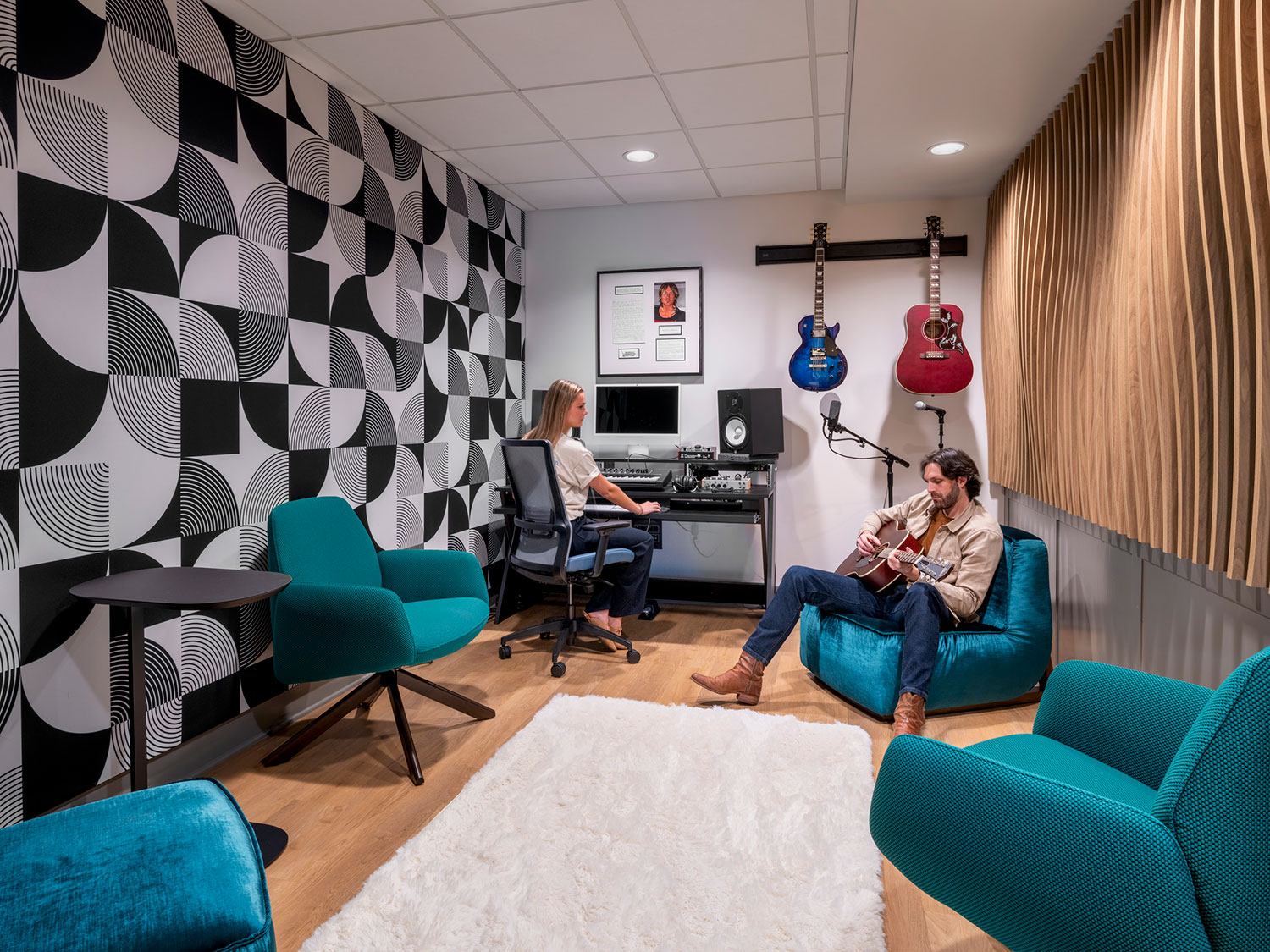
The Buddy Lee Attraction/Capitol Records building renovation highlights how design can enhance learning in a city built on music and is phase one of a larger Music Row strategy. The project introduced songwriting rooms, live sound classrooms and student lounges, honoring the legacy Buddy Lee started many years ago.
Every aspect was designed to uplift the creative process. In a recording and songwriting environment, that meant crafting spaces that naturally encourage collaboration while still allowing for focused, individual work. The facility brings this to life through practicum suites, listening rooms and flexible student lounges that support songwriting, audio engineering and critique.
Working within the building’s existing framework, the design team leaned into exposed structure and precisely tuned acoustic treatments to enhance both performance and spatial experience. Constraints like low ceiling height pushed us to be more intentional with acoustical solutions and materiality. The goal was to create rooms that not only perform at a high level technically but feel authentic to the industry. At the end of the day, these spaces are designed to give students the freedom to experiment, take risks and fully tap into their creativity.
Spaces where creativity collides with industry talent
The Mike Curb College of Entertainment and Music Business blends reverence for Music Row’s storied legacy with a bold step into the future. A university goal was to design a campus that assists all aspects of the creative process. Flexibility is key, and we wanted to accommodate both today’s learning and the music of tomorrow. In practice, that flexibility shows up in spaces designed to adapt, supporting a wide range of activities without sacrificing performance or experience. That means spaces should:
- Support simultaneous, often loud activities
- Accommodate evolving technology without constant rebuilds
- Reflect what working studios actually feel like
- Function well for teaching, and impromptu connection with the surrounding professional community
New technology shapes how music is recorded and mixed, but what makes a space truly great is how it makes people feel and interact. Even the most advanced technology benefits from the grounding of a well-designed physical environment.
ESa’s design process recognizes that education, performance and real-world artistry are inseparable. A well-designed space doesn’t just house students, but a place where inspiration takes root, artists are shaped and Nashville’s sound continues to evolve.
Supporting the next generation of creators
Creativity thrives when users are deeply understood, especially in the higher education space. Nashville’s future in music will be defined by spaces that match the ambition and originality of the artists within them. Through the Fisher Center for the Performing Arts, Buddy Lee Attraction and Mike Curb College, ESa is facilitating the city’s creative story that continues to evolve one classroom, stage and studio at a time.
Ready to talk about your next educational or performing arts project? Get in touch with our team.