Justin Roark’s passion project: Designing healthcare spaces for care
How personal experience, empathy and ownership shape a more human-centered approach to healing environments
For Justin Roark, healthcare design has never been just about buildings. With over two decades in architecture, his understanding of healthcare environments has shifted from technical to deeply personal. Experience, relationships and moments outside the office have increasingly influenced the way he approaches design and the responsibility that comes with shaping healthcare spaces.
While walking the wooded area that would eventually become the Anna Shaw Children’s Institute, Justin saw more than a building site. Surrounded by trees and nature, he imagined an environment that felt restorative and familiar. The idea eventually evolved into a modern treehouse in the woods, rooted not only in aesthetics but in creating comfort for children and families during difficult moments.
For Justin, that project reflects a larger belief that the best healthcare environments emerge from designers who understand the emotional reality of the people using them.
Designing with ownership, not distance
Justin’s relationship with ESa began long before he joined the firm. As a student at Louisiana Tech University, he interviewed ESa leaders for a class project, and those conversations stayed with him. Instead of treating the interaction as transactional, the team remained connected and eventually invited him to join the firm after graduation.
The team’s sense of ownership, approach to mentorship and people-centered design resonated with Justin. The spaces architects create are shaped by the experiences and ideas they bring into the process. That philosophy traces back to one of Justin’s earliest healthcare projects and one of his most influential mentors.
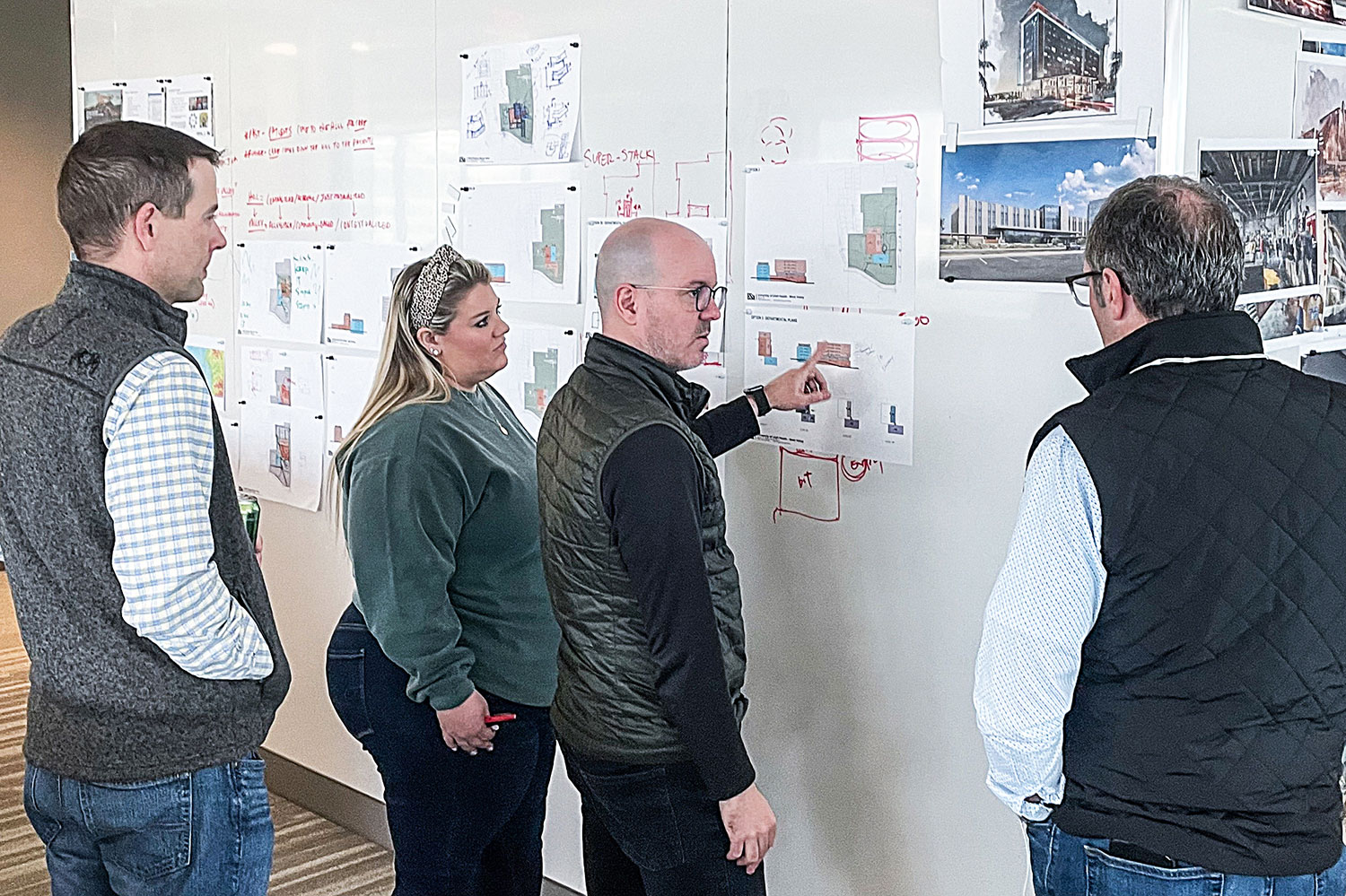
Early in his career, Justin worked alongside Sam Burnette on a hospital project in Colorado. Justin describes Sam as an “architect coach” — someone who led with patience and curiosity rather than hierarchy. Sam gave Justin a code book, a few examples and a challenge to start drawing.
Rather than discarding Justin’s ideas and replacing them with his own, Sam built on them, refining and strengthening the thinking already on paper. That trust changed Justin’s understanding of mentorship and design leadership. It also helped him discover what would become a lasting passion for healthcare architecture and the impact of the designer’s experiences on the built environment.
Lived experience influences design
When Justin first entered healthcare design, he understood it primarily as a technical discipline. Hospitals had codes to satisfy, operational requirements to solve and complex systems to coordinate. Experience, especially in healthcare, was currency. But over time, life expanded his perspective.
As family and friends moved through healthcare systems, Justin began seeing these environments differently. He saw them less as buildings and more as places people encounter during some of life’s most vulnerable moments. While designing the Peeples Cancer Institute at Hamilton Medical Center, Justin was beginning his cancer center design experience. At the same time, a close friend was diagnosed with cancer, and the work became more personal.
The patient journey was no longer theoretical because it had a face attached to it. Experiences like that changed how Justin approached design decisions and reinforced the idea that healthcare architecture extends beyond floor plans and square footage. Parenthood added another perspective. After becoming a father, Justin found himself paying closer attention to the experience of families and caregivers and thinking differently about the environments surrounding mothers and children.
Pulling the line through experience
Justin often talks about a design philosophy he calls “pulling the line.” For him, it means creating continuity through a project by carrying visual and emotional threads from exterior to interior and helping people intuitively move through spaces. This approach shaped his work with the Anna Shaw Children’s Institute’s design, where the treehouse concept felt approachable and familiar to people from the start. Transforming that idea into a complex three-story pediatric behavioral health facility, however, presented a different kind of challenge. For Justin, the value came from balancing technical requirements with emotional impact and creating a place that felt less intimidating and more welcoming.
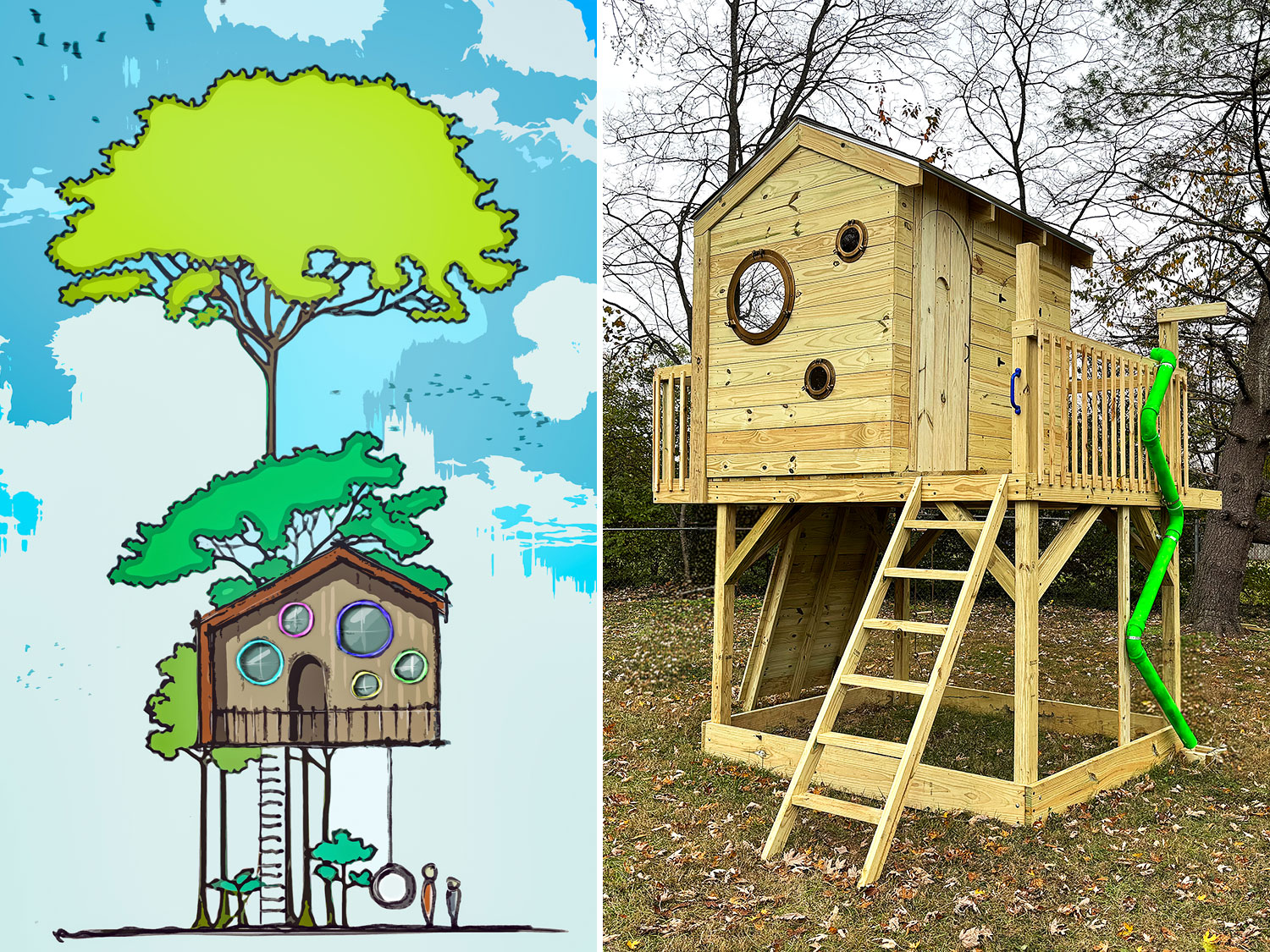
While that idea influences his design approach, it also shows up in the way he thinks about the built environment more broadly. Outside of work, Justin spends time woodworking, painting and gardening. Years after designing the Anna Shaw Children’s Institute, Justin built a treehouse for his own children. Looking back, he realized the structure bore a striking resemblance to his original project sketches.
Without realizing it, he had carried an idea from his work life into his personal life. Or, according to his own design approach, the line had always been there. The things that inspire him inevitably find their way back into the work.
Designing for people first
For Justin, healthcare architecture ultimately comes down to people. Healthcare spaces shape experiences during moments of uncertainty and healing, influencing how people move, feel and connect with those around them. He sees architecture as a service that bridges function and humanity, where empathy often makes the difference between a building that simply functions and one that genuinely supports the people inside it. Ultimately, the most meaningful healthcare environments are not just designed for care, but designed with people in mind.
Interested in designing healthcare environments centered around patient experience? Learn more about ESa’s approach and connect with Justin here.