Reintroducing ESa: Relationships that built a healthcare legacy
Few buildings shape a person’s life as directly as a healthcare facility. It’s where many of us take our first breath and where we sometimes say goodbye. The rooms, corridors and waiting areas linger in memory. The design of these spaces can do more than comfort. They can also help care teams move faster, reduce errors and, in the most literal sense, save lives.
Richard L. “Dick” Miller, ESa chairman emeritus and veteran architect, spent a career inside that reality and describes healthcare as “strictly a relationship business.”
For ESa, those relationships became both compass and catalyst, carrying the firm from Nashville’s early healthcare boom to work across the country. This first installment of “Reintroducing ESa,” a blog series about the firm’s legacy and a look into the future of architecture, goes back to the beginning: the firm’s earliest healthcare partners, the projects that shaped its trajectory and the Nashville network that helped ESa build a national reputation.
1968: ESa’s landmark healthcare project and the start of a legacy
Miller traces ESa’s first major healthcare relationship to 1968, when the firm began working with Extendicare, which later became Humana. In those years, the business was rooted in building and operating hospitals, and ESa was brought in to support that growth.
The firm’s earliest healthcare project was a small addition to a wood-frame hospital in Hartselle, Alabama. These early projects – small hospitals, nursing facilities and additions – were modest in scale, but they became a practical education in how healthcare environments function.
“Earl came in and asked, ‘Who wants to try healthcare?’ I said, ‘I do.’ I didn’t know anything about it—but that’s how it started.”
For a young Nashville firm, the work was an apprenticeship in how care is delivered – how staff move, where delays stack up, how a building has to flex as medicine changes and a hospital expands. That early relationship gave ESa proximity to decision-makers, and the pace of work demanded practical problem-solving.
It also placed the firm inside a rapidly evolving industry. Soon, economic whiplash and shifting healthcare models would test which partnerships held and which firms could adapt.
The 1970s: A downturn and the breakthrough that followed
Miller remembers the mid-1970s as a hard stop. An economic downturn tied to the oil embargo drove interest rates above 20%, and gasoline climbed past $4 a gallon. Healthcare work “evaporated.”
Then, in 1978, ESa’s healthcare work found traction again through its first project for HCA Healthcare – a trio of small hospitals in Erin, Brownsville and Trenton, with Humboldt following soon after. It marked the start of a long run in the for-profit world, where projects moved fast and decisions were measured in efficiency as much as aesthetics. The work taught ESa to design with operations and hour-by-hour hospital functions in mind. Small planning choices could affect staff time, patient flow and ability to grow.
That experience became an advantage later, when not-for-profit systems started looking for partners who could bring that same discipline to mission-driven care.
The 1980s: Outpatient signals and research that put ESa ahead of the curve
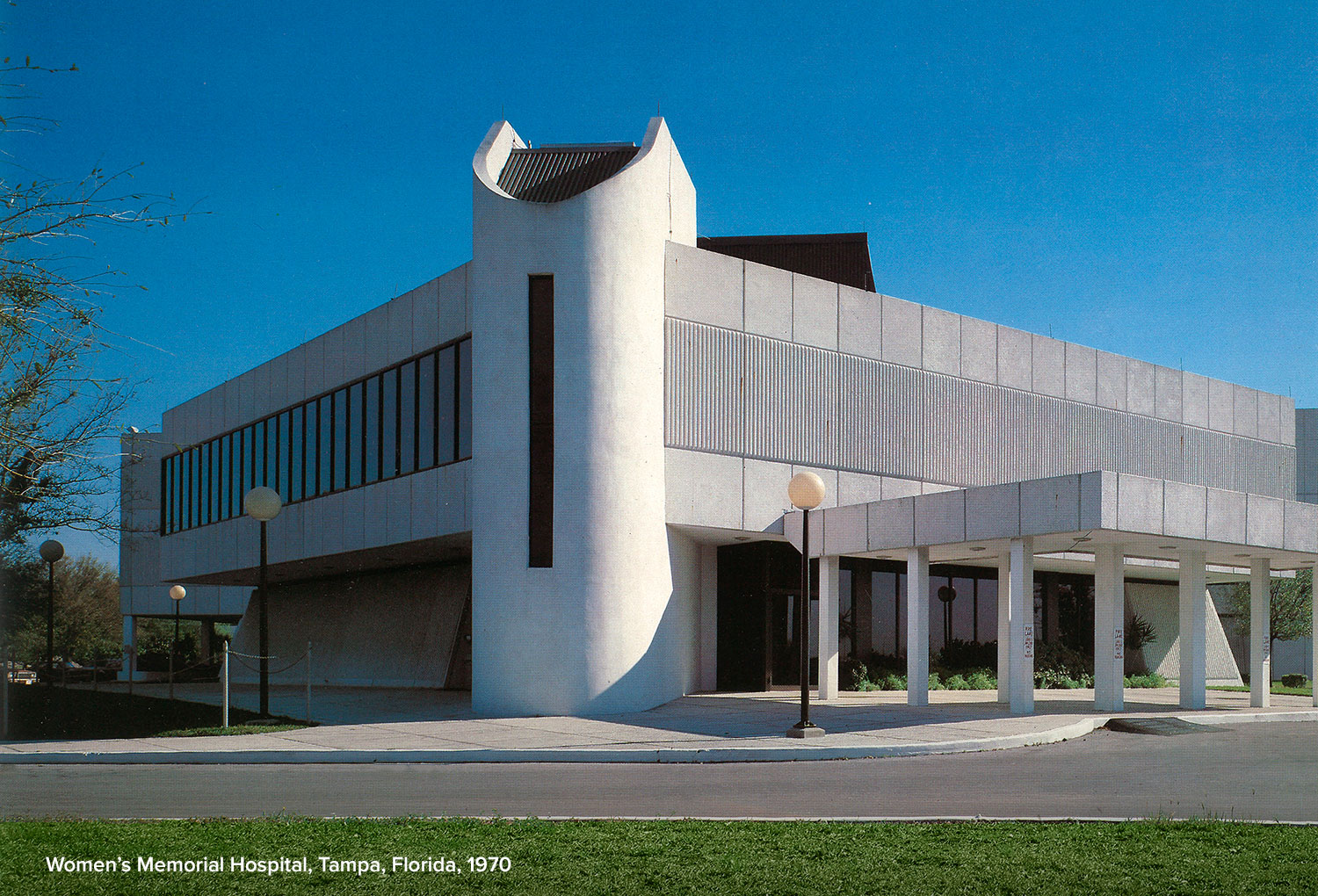
By the early 1980s, Miller and ESa founder Earl Swensson watched a quiet shift that would later reshape the entire industry. Care was beginning to move beyond the traditional hospital stay. Clinics, specialty centers and other outpatient settings were gaining traction. For Miller, the signs were clear: healthcare was not going to stay in one building.
Projects like Elmhurst Memorial Health Center, a bed-less hospital, and Samaritan North Health Center in Dayton demonstrated an early move toward community-based access points for care. A concept now central to modern healthcare delivery.
At the same time, ESa started investing in research, partnering with both the University of Mississippi and Auburn University. A key collaboration with pharmacy professor Ken Baker led to innovation in operational efficiency. One example was a circular pharmacy module that allowed staff to fill prescriptions without leaving a central position, reducing patient wait times dramatically.
The Synergenial Concept
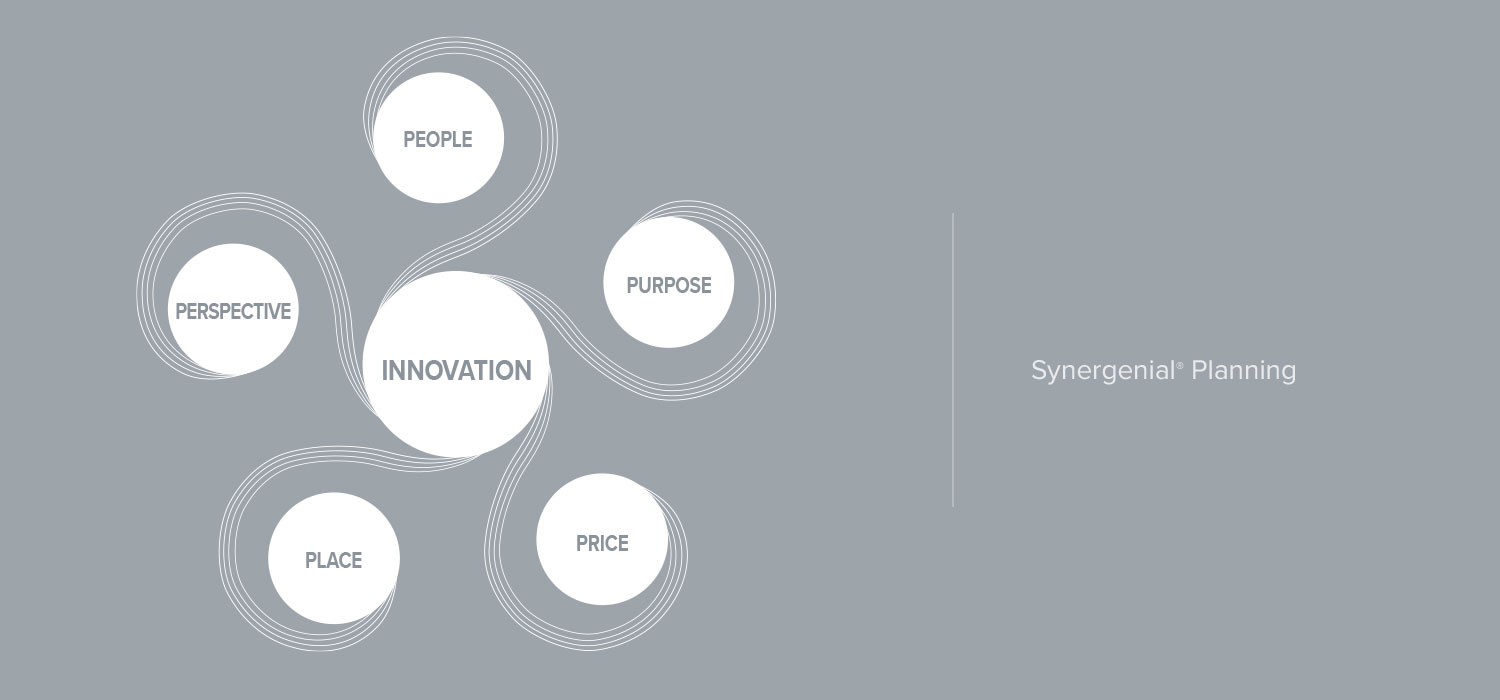
This work reflected a broader philosophy developed by Swensson, known as the “synergenial” concept, an approach to design that integrates people, processes and environments into a cohesive system. Rather than viewing buildings as isolated objects, the idea emphasized how architecture could bring together caregivers, patients, technology and workflow into a unified whole. For ESa, this thinking became foundational, shaping how the firm approached health care design as interconnected systems of care.
This research expanded into a broader initiative focused on the future of health care delivery, often explored through the “Edna” patient model – a hypothetical scenario used to understand how patients might move through evolving systems of care. The firm presented this research at an international health care symposium in Budapest, underscoring how forward thinking the work was at the time.
The late 1980s-1990s: Relationships that took ESa beyond Nashville
From 1978 through the 1990s, ESa’s healthcare work was closely tied to HCA Healthcare, a relationship that not only sustained the firm, but helped carry it beyond Nashville into new cities and states. As HCA expanded nationally, ESa expanded with it, supporting projects across a growing network of facilities and gaining experience in diverse markets. Much of this work also expanded through HealthTrust, which grew out of the HCA system, further strengthening ESa’s reach and reinforcing the firm’s reputation within a tightly connected community.
When HCA restructured into Columbia HCA in the early 1990s, that longstanding relationship paused for nearly six years due to shifting priorities and a fundamental change in approach. While initially destabilizing for the firm, the period became a turning point.
In many ways, that transition was made possible by the very relationships built during the HCA years. Leaders and administrators who had worked within HCA and HealthTrust systems began moving into roles at other hospitals across the country, often bringing ESa with them. What had started as a single-client concentration evolved into a broader network of trusted partnerships.
That shift:
- Expanded ESa into not-for-profit healthcare systems
- Strengthened relationships with healthcare leaders across multiple organizations
- Diversified project types and extended the firm’s geographical reach nationwide
Projects like PineLake Regional Hospital in Mayfield, Ky., reflect this evolution, where relationships formed within the HCA/HealthTrust network and continued through leadership transitions into the new systems. At the same time, ESa continued delivering major work in Nashville, including the Centennial Medical Center expansion, balancing local impact with growing national reach.
This period of growth and diversification also coincided with a moment of reflection and knowledge-sharing. In 1995, Miller and Swensson co-authored “Hospital and Healthcare Facility Design (W.W. Norton & Company), with current ESa president, Todd Robinson, joining in later editions. Widely regarded as a standard in the field, the book has been used for decades in university architecture and healthcare planning programs, introducing multiple generations of students and professionals to the principles of designing healing environments that support both patients and caregivers.

A Defining Milestone: Mayo Clinic Hospital, Phoenix (1994)
One of ESa’s most pivotal moments came with the Mayo Clinic Hospital in Phoenix, Ariz. After touring ESa-designed facilities in Nashville and Kentucky, Mayo leaders were struck by the quality achieved at significantly lower costs. That visit led to the commission of the Phoenix hospital, a pivotal moment that elevated ESa to a national stage.
The Mayo Clinic Hospital was designed to support high-acuity care while allowing for significant future growth. An interstitial floor enabled expansion of building systems without disrupting operations, and patient rooms were organized in smaller clusters to support clinical oversight and workflow.
“That project changed everything,” Miller noted. “It put us in a different category.”
The 2000s: ESa sets a standard in healthcare design
The 2000s marked another shift in ESa’s healthcare story. The firm was no longer introducing itself to the market, rather it was being sought out by those who watched its teams deliver complex work and wanted that same steadiness on their next project.
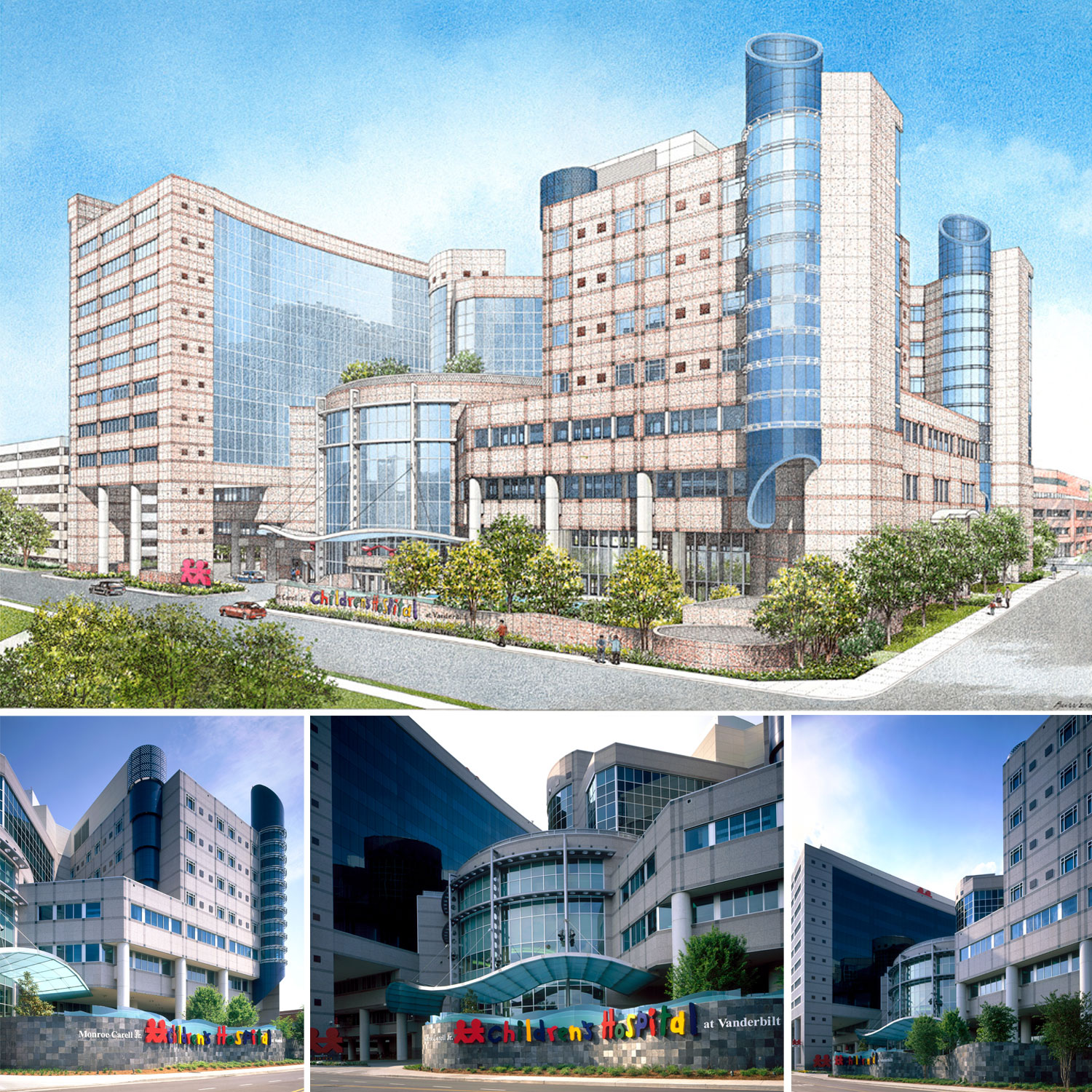
In Nashville, Monroe Carell Jr. Children’s Hospital at Vanderbilt became one of the landmark projects that reinforced ESa’s role in shaping healthcare in a city known for it. Completed in 2004, it was the region’s first full-service, freestanding children’s hospital. The 238-bed, eight-story hospital was designed from a child’s perspective, with family support spaces integrated throughout.
This period also reflected a broader articulation of the firm’s design philosophy. In 2008, Swensson published A Passion for Design: Human-Centered Architecture and Syngergenial Practice, which outlined his belief in human-centered design and the integration of people, process and environment. The book reinforced ideas that guided ESa’s work for decades, bringing clarity to an approach already deeply embedded in the firm’s projects.
The 2010s: Community Impact and Expanding the Definition of Care
The 2010s saw ESa expanded its influence beyond traditional healthcare facilities, bringing its expertise into community-focused and unconventional spaces. At it’s core, the work remained the same: improving how care is delivered, regardless of the setting.
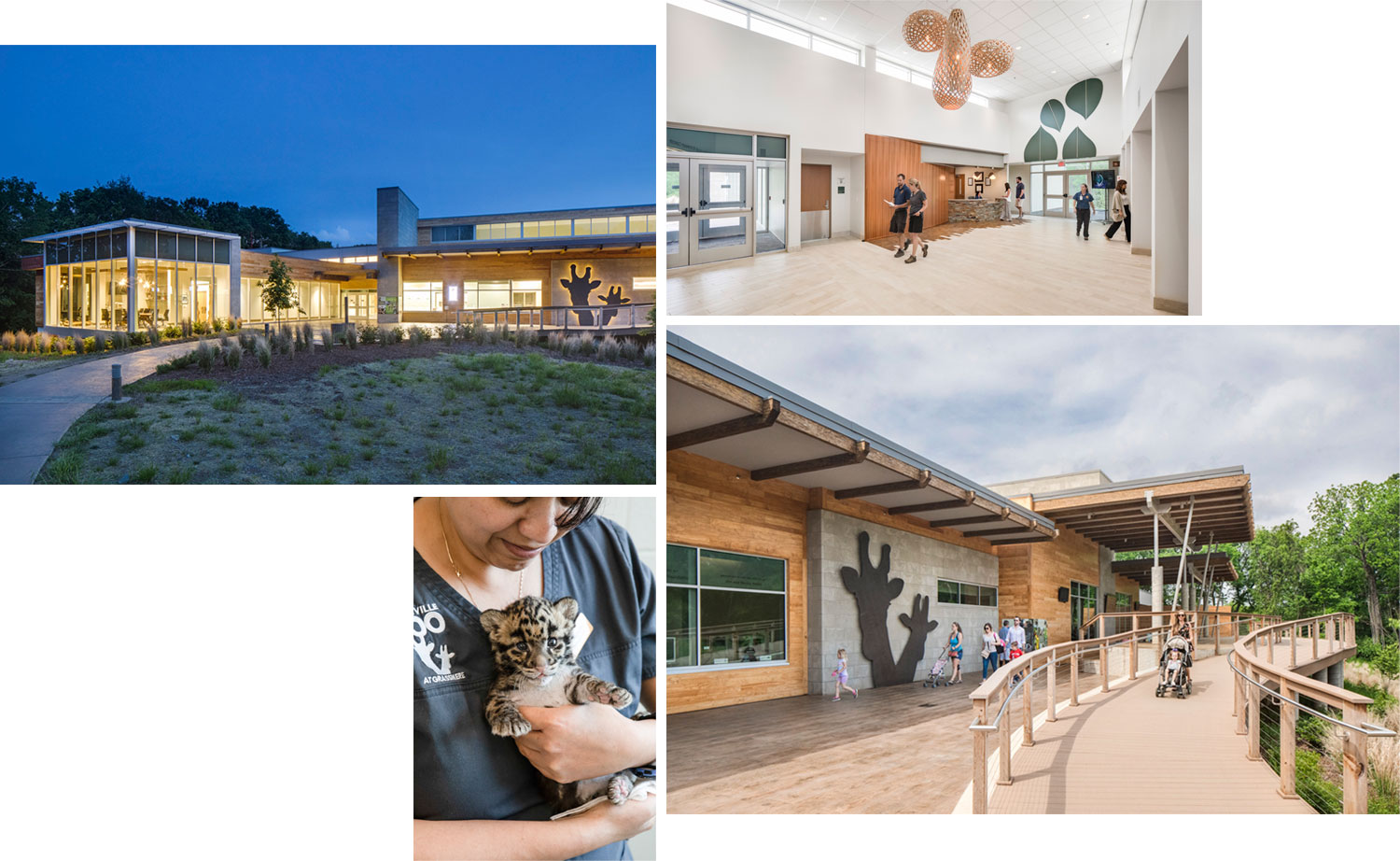
One of the most unique examples was Nashville Zoo’s veterinary center, developed in partnership with HCA. What began as a conversation turned into a pro bono effort driven by community support and relationships.
“I’d never designed an animal hospital,” Miller recalls. “But care is care, it’s still about how you treat the patient. Reflecting on the interview, he adds, “They brought in a clouded leopard cub and just let it run. That was the wildest interview I’ve ever been to, literally.”
The project translated ESa’s human healthcare design approach into a veterinary setting, focusing on efficiency, safety and the experience of both caregivers and patients. It also reinforced the firm’s ties with HCA and demonstrated how those relationships could extend beyond traditional project types and serve the broader community needs.
By this time, pro bono and philanthropic work had become a meaningful part of ESa’s identity. These efforts were never driven by recognition, but by a belief in contributing to the community the firm calls home. As Miller puts it, “you don’t do it for recognition, but it doesn’t go unnoticed. Being part of the community matters.”
The present day: Research, adaptability and healthcare moving closer to patients
The ideas Miller and Robinson were studying decades ago are no longer theoretical. Care is increasingly being delivered beyond the traditional hospital stay, and technology has made it easier for health systems to expand services, coordinate treatment with other providers and meet patients where they are. The questions ESa was asking in the 1980s are showing up now in new forms and at a much larger scale.
Vice President and Principal Kevin Harney describes adaptability as one of ESa’s defining strengths, not only in what the firm designs, but in how it works with clients. As care models and priorities shift, ESa has been able to adjust its approach without losing the fundamentals that built its healthcare practice, listening closely, anticipating what is next and delivering solutions grounded in real operations.
That mindset is reflected in ESa’s current work, including Children’s Healthcare of Atlanta’s Arthur M. Blank Hospital, completed in 2024. At 19 stories and 2 million square feet, the hospital blends a nature-forward setting with advanced technology, reflecting how today’s healthcare facilities are expected to support both patient experience and increasingly complex operations.
For Miller, the throughline is the same from the beginning to today. Healthcare remains a relationship business. Partnership is built over years, tested on high-stakes projects and carried forward as leaders and systems evolve. That approach helped ESa grow alongside Nashville’s rise as a healthcare hub, and it continues to shape the firm’s work today.
Connect with ESa
If you are planning a new healthcare facility, expanding a campus or rethinking how care will be delivered in the years ahead, ESa’s healthcare team can help. Contact us.