Design that speaks: Hannah Terry on creating spaces that tell a story
Seeing design through the eyes of the people who use it
For Hannah Terry, design has always started with curiosity. Long before she became an architect and interior designer, she was captivated by the spaces around her. Growing up in rural Kentucky, Hannah found herself fascinated by the neighboring homes. She would often ask to see inside friends’ houses or have her parents drive her around different neighborhoods. From a young age, she enjoyed studying the details that made each one unique and wondered why certain places felt welcoming while others did not.
Looking back, those childhood moments were less about the houses themselves and more about how people experienced them – how she experienced them. Each new exploration broadened her perspective and strengthened that curiosity. A childhood trip to New Orleans introduced her to architecture unlike anything she had seen before, and studying abroad in France deepened her appreciation for the way buildings reflect the community. She claims her “uncanny sense of direction” in new cities is attributed to the memorable architecture.
Today, as a design manager at ESa, Hannah approaches every project with that same mindset. Before she begins thinking about materials, layouts or finishes, she starts with a simple question: What kind of experience will this space create?
Finding place through exploration and experience
Hannah believes that good design begins long before drawings or renderings. Every project starts with understanding the people who will use it and the story the building should tell. Whether she’s designing a hotel or commercial office, she spends time researching the site’s history, learning about the local culture and imagining how people will move through the space.
She often describes her process as putting herself in someone else’s shoes. It’s easy to focus on what a building looks like, but Hannah’s design philosophy centers on how the design will make people feel.
That people-first philosophy developed over time. Early in her career, Hannah intentionally explored different project types, firms and cities, discovering as much about what inspired her as what didn’t. Each experience helped refine her design perspective and reinforced that meaningful architecture requires more than technical expertise. It requires empathy.
Finding ESa became an important part of that journey. The firm’s collaborative culture allowed Hannah to contribute her own ideas while continuing to learn from experienced teammates across disciplines. Rather than working in isolation, she found an environment where diverse perspectives strengthen every project and where creativity is encouraged alongside technical excellence.
Crafting hospitality spaces with meaning
For Hannah, hospitality projects are especially rewarding because she can experience them from the same perspective as the people they’re designed to serve. Hospitality design creates opportunities to build places that people actively choose to experience. Long after a project is complete, she can return with family or recommend it to friends, watching people create memories inside spaces her team helped bring to life.
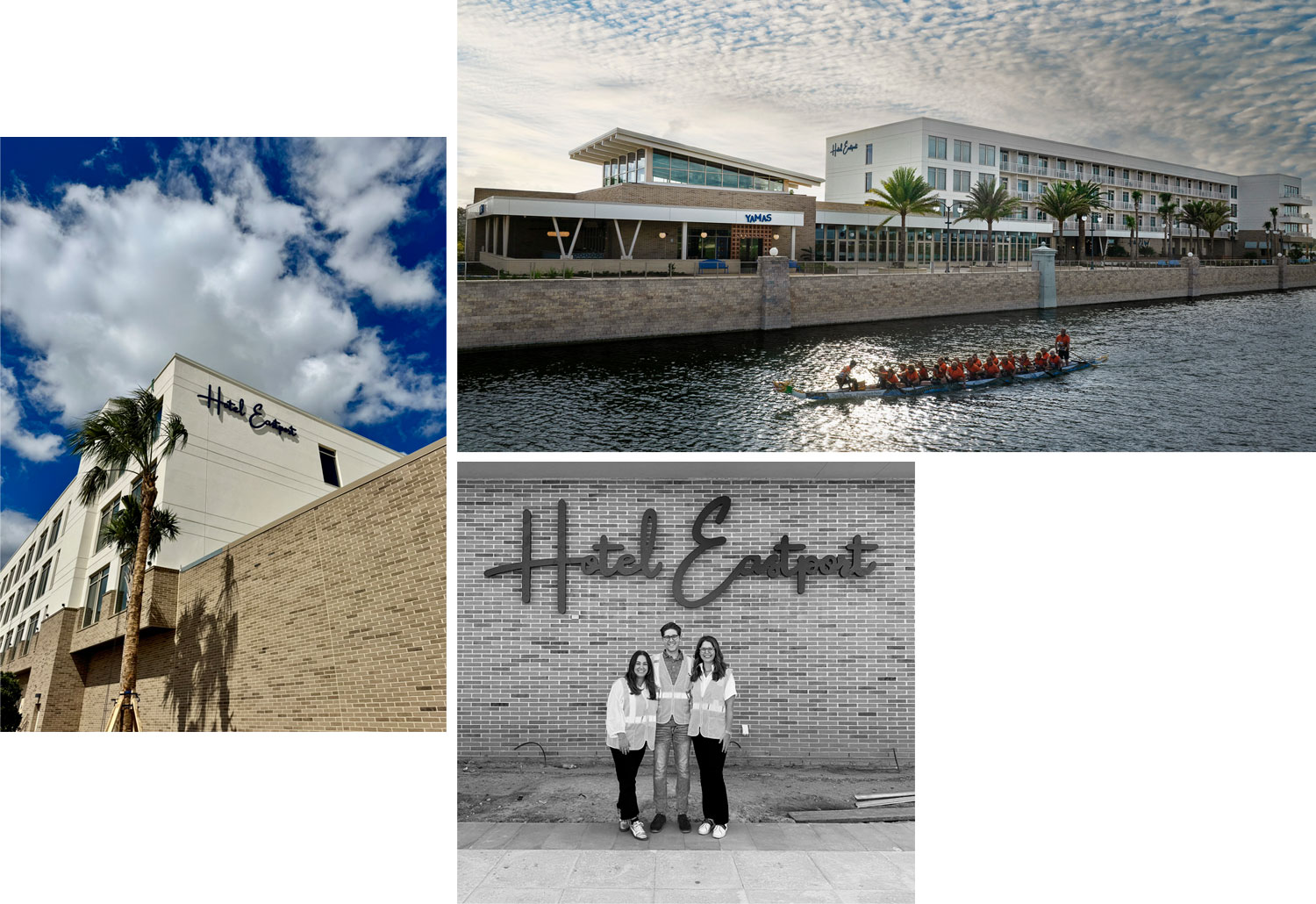
While working on Hotel Eastport, she was challenged to move beyond the floor plan and immerse herself in the town’s story. Instead of designing a hotel, Hannah began thinking about what made the space meaningful to the community. A story of a 1950s roadside motel emerged within ESa’s design, where the architecture, materials, lighting, furnishings and artwork all felt connected. This shared story created an experience that felt intentional rather than assembled.
Hannah often says she doesn’t think about buildings as two-dimensional plans. She thinks about how someone experiences them from the moment they pull into the site until they leave. The exterior should prepare visitors for what’s inside, and materials should feel grounded to create an intentional experience.
Where architecture, interiors and art intersect
One of Hannah’s favorite parts of the design process is discovering inspiration beyond architecture itself. She finds it in fashion, art, travel and everyday experiences.
A particular fabric texture, the way materials are layered in a garment or the colors found in a piece of artwork often become part of the vision boards she develops for projects. These influences help create spaces that feel rich, tactile and connected rather than purely functional.
She’s especially interested in projects where architecture and interior design work together seamlessly. In Tempe, Arizona, the design team plans to collaborate with a textile artist whose work will inspire patterns carried throughout the in-progress hotel project. Rather than treating art as decoration added at the end, it will become part of the architectural story itself, reinforcing the local identity and creating continuity between the interior and exterior experience.
That same creative mindset extends beyond her work at ESa. During the pandemic, Hannah turned to painting as a creative outlet. What started as a personal practice soon evolved into commissioned pieces, local art shows and a tradition of creating artwork as gifts for friends, family and even ESa’s annual Earth Week raffle.
While architecture and painting are very different mediums, Hannah sees a common purpose between them by creating something that resonates with people. From blueprint to canvas, she’s thinking about the experience someone will have and the emotions they’ll take away from it.
Collaboration, mentorship and creating better work together
Despite her passion for design, Hannah is quick to point out that architecture is never the work of one person. Her biggest pet peeve is hearing designers describe projects as “my project.” Every successful project reflects dozens of ideas coming together, and Hannah recognizes that collaboration and mentorship are the keys to design success.
Throughout her career, mentors like Brandon Keown have played an important role in helping her grow that perspective and inspired her to invest in the next generation of architects. Hannah serves as an adjunct instructor at Belmont University’s O’More College of Architecture & Design, where she teaches foundational design and digital representation courses. She also volunteers as an ACE Mentor Program mentor, helping introduce students to careers across architecture, construction and engineering.
Teaching has given her a new appreciation for the importance of encouragement, honest feedback and creating space for others to develop confidence in their own ideas. Just as she continues learning from colleagues every day at ESa, she hopes to help future designers discover their own creative voice.
Designing spaces with people at the center
From exploring neighborhoods as a child in Kentucky to designing hospitality environments that welcome guests from around the world, Hannah’s people-first perspective has remained remarkably consistent.
That philosophy guides every project she touches, and Hannah continues to combine empathy and technical expertise to create environments that feel thoughtful. The little girl who once wondered what was behind every front door never went away. Today, she’s the one shaping the spaces inside.
Interested in creating spaces that put people first? Learn how ESa partners with clients to design environments rooted in experience, collaboration and purpose.