Rethinking recovery: How short-stay spaces are reshaping outpatient surgery
Kevin King, Associate AIA
Emily Karbo, DNP, RN, EDAC, Associate AIA
Healthcare delivery continues moving beyond the walls of traditional hospitals. As outpatient and ambulatory surgery models expand and procedural techniques transition to more minimally invasive approaches, more procedures once required to be performed in the hospital setting can now be safely performed in the ambulatory setting. Accommodating lower-acuity patients and procedures, these ambulatory settings are designed around convenience, efficiency and patient-centered care.
Growing travel distances for specialized procedures, persistent rural healthcare access challenges, and an aging population are exposing a critical gap in the patient journey: the recovery experience. This need is increasing demand for facilities that offer focused, supportive recovery following an ambulatory procedure, known as short-stay centers, which are anticipated to be included in the 2026 Facility Guidelines Institute (FGI) Code update planned for release later this year.
Continuity of care in comfort
Historically, options for patients needing additional support after a procedure have included: admission or observation in the inpatient setting, transition to skilled rehab, or arranging home health services. For patients undergoing a procedure in the ambulatory setting, the services provided by these options might exceed what is truly needed for the patient to help support the patient’s mobility and activities of daily living.
A patient may be stable enough to go home following their procedure but still require proximity to care for follow-up appointments. Others may be traveling long distances from rural communities to access specialized treatment and need additional time near their care team and support services. Some patients may experience mobility limitations in the days following a procedure, while others simply do not have adequate caregiver support available at home.
This challenge informed ESa’s design work for the University Hospitals Amherst Health Center and ValueHealth Amherst Beaver Creek Surgery Center campus. The project introduced an innovative stay suite concept connected directly to the ambulatory surgery center, creating a hospitality-inspired environment where patients could remain close to care while recovering in a more comfortable, non-acute setting.
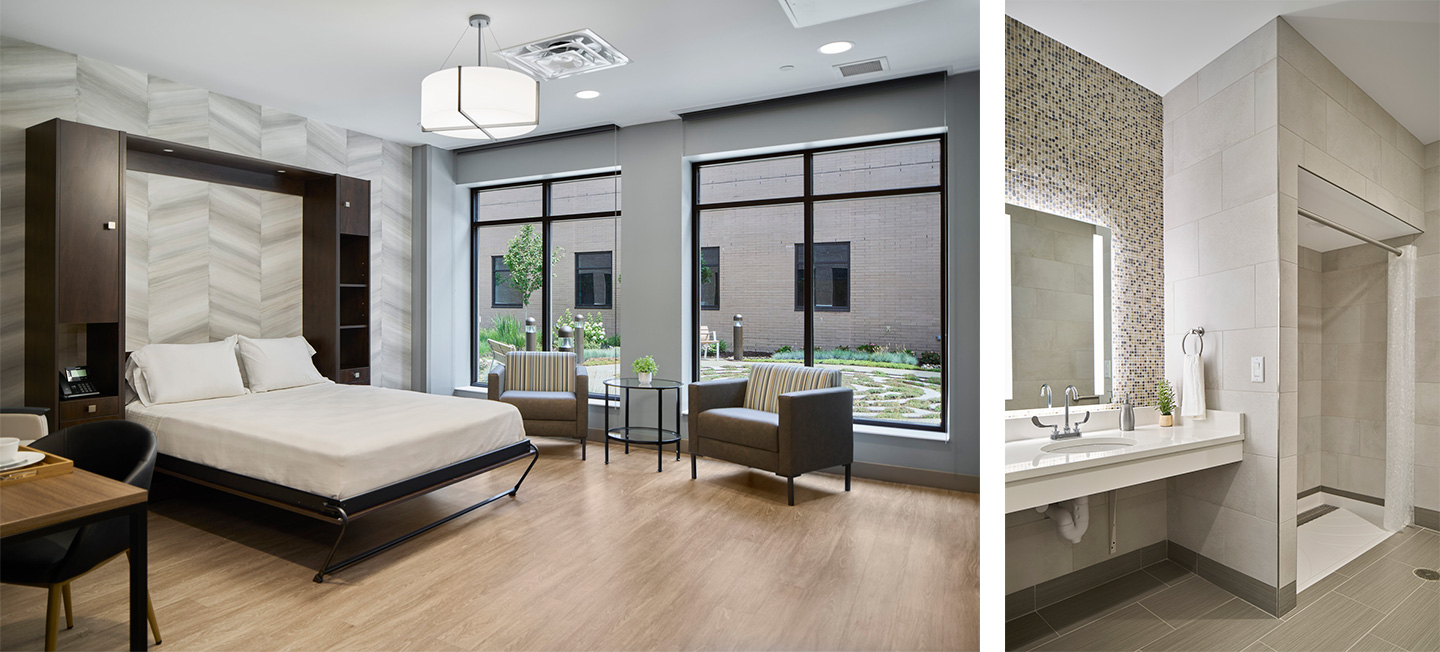
The benefits extend beyond convenience. For some patients, recovering at home too early can create stress, safety concerns and unnecessary barriers to follow-up care. In some cases, it can even increase the likelihood of avoidable readmissions, such as with patients who are at a higher risk of falling.
For healthcare organizations, utilizing inpatient beds for patients without acute clinical needs can strain limited resources and lead to challenges in bed flow. Creating spaces specifically designed for patients who need some assistance with activities of daily living (ADLs) or closer proximity to their care team after undergoing a procedure in the ambulatory setting can help preserve inpatient capacity while aligning care environments with patient needs.
Short-stay suites also create opportunities for more flexible staffing approaches. Certain patient needs, such as mobility assistance, feeding, and recovery support, can be addressed by team members trained specifically for this type of patient support in the ambulatory setting, while having licensed clinicians to maintain focus on the clinically oriented needs in the acute care setting. As workforce shortages persist across healthcare, this model offers meaningful operational advantages and supports care team satisfaction.
Hospitality-informed healing
For ESa, the value of short-stay suites extends beyond operations. The design of the recovery environment can have a meaningful impact on patient well-being. Unlike traditional inpatient settings, these spaces often blend healthcare and hospitality principles, creating a more comfortable and less institutional experience. Patients may not require intensive clinical care, but they still benefit from environments that promote healing, reduce stress and support recovery.
This patient-centered approach shaped the Amherst campus from the very beginning. Drawing from hospitality design principles, the facility offers a recovery experience that includes:
- Hotel-like rooms with warm materials and finishes that maintain a clean medical environment
- Natural light, porcelain tile flooring and wood accents throughout the amenities to soften the clinical environment, balancing comfort with the durability and performance required in healthcare settings
- A large healing garden with greenery, meditation spaces and restorative outdoor environments designed to support wellness for patients, families and staff
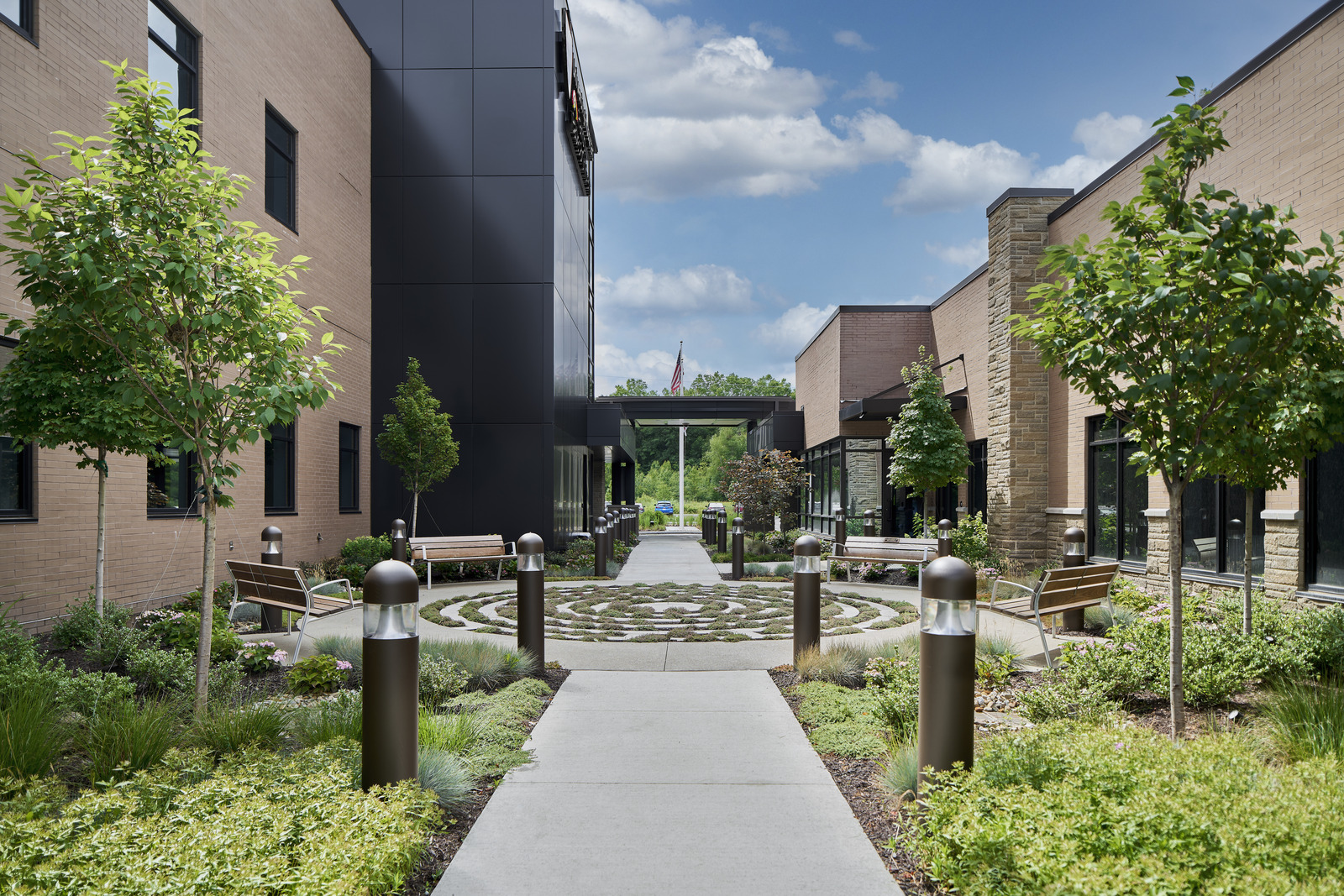
Community gathering areas, kitchenettes, biophilic strategies and hospitality-inspired amenities can help reinforce recovery as a distinct phase of care rather than simply an extension of hospitalization. Supporting that experience requires a different design approach than traditional inpatient environments as healthcare organizations continue to expand short-stay care models.
The future of short-stay recovery models
ESa’s work with University Hospitals suggests that the future may not be about expanding traditional models, but creating new environments that support care in more thoughtful ways.
Healthcare design increasingly requires planning for both today’s care delivery needs and the emerging models that will shape the future. Integration with adjacent services, such as home health support, may further extend the value of short-stay recovery environments and strengthen continuity across the care journey.
As ambulatory surgery continues to expand, patient expectations evolve and healthcare organizations work to improve access for rural communities, recovery spaces may become more intentional, flexible and integrated into the broader care experience. In that evolution, short-stay suites will help define the next era of outpatient care, driven by a holistic and patient-centered approach.
Whether you’re exploring ambulatory expansion, short-stay recovery environments or flexible care models designed for the future, ESa’s healthcare team can help identify opportunities that align patient experience with operational goals and thoughtful design. Reach out to start the conversation.