Designing Healthcare Spaces That Support Clinician Retention
Emily Karbo, DNP, RN, EDAC, Associate AIA
Employee retention is one of the greatest challenges facing healthcare systems today. From high turnover rates to staff burnout, clinicians are under a significant amount of pressure. Having worked as a Registered Nurse in an intensive care unit, I know how stressful this environment can be.
Drawing from my clinical background and design experience, I serve as ESa’s clinical operations and design specialist, bridging clinical experience with healthcare facility design. Thoughtful planning can reduce burnout, boost efficiency and improve both clinician and patient experiences. Design goes beyond organizing a space. It shapes how supported and empowered a care team feels every day.
How design influences clinician satisfaction
For clinicians whose daily work is inside healthcare facilities, these spaces directly affect their workflows as well as their physical safety and mental health. When designers listen and understand staff needs, the result is healthcare spaces that not only enhance patient care but also boost clinician satisfaction and retention by giving caregivers the supportive environments they need to focus on what matters: providing care for patients.
ESa designs with these factors in mind to enhance wellness and efficiency:
- Efficiency and reduced cognitive burden: Decentralized supply access, ergonomic design and streamlined layouts minimize wasted steps, injury potential and mental fatigue.
- Visibility and response time: Housing documentation stations near patient rooms enables faster response to acute patients, while clear sightlines across the unit improves visibility of colleagues and safety.
- Collaboration and communication: Collaboration creates better patient outcomes. Decentralized teamwork stations facilitate interdisciplinary collaboration and shared decision-making.
- Evidence-based design principles: Use of natural light, biophilic design, circadian rhythm lighting, infection prevention strategies and fall-reduction layouts all contribute to staff wellness and safety.
- Integration of technology: Designing the built space to accommodate evolving technologies that help support care team members in their workflows, from robotics to digital whiteboards, and devices for hybrid care delivery.
Putting principles into practice: Carilion Roanoke Memorial Hospital
These concepts were implemented during the design of the Crystal Spring Tower at Carilion Roanoke Memorial Hospital. Before the project, cardiology services were fragmented across the campus, which strained staff efficiency and made collaboration more difficult.
ESa’s design of a new 12-story tower with dedicated entrances and improved accommodations for care teams served to unify these services. By consolidating services vertically, the design created a cohesive home for cardiovascular care that improved workflows, safety and collaboration. On this small site, the emergency department addition served as the cornerstone for the vertical expansion, requiring creative solutions in order to remain operational throughout construction while minimizing disruption to staff workflows and patient care.
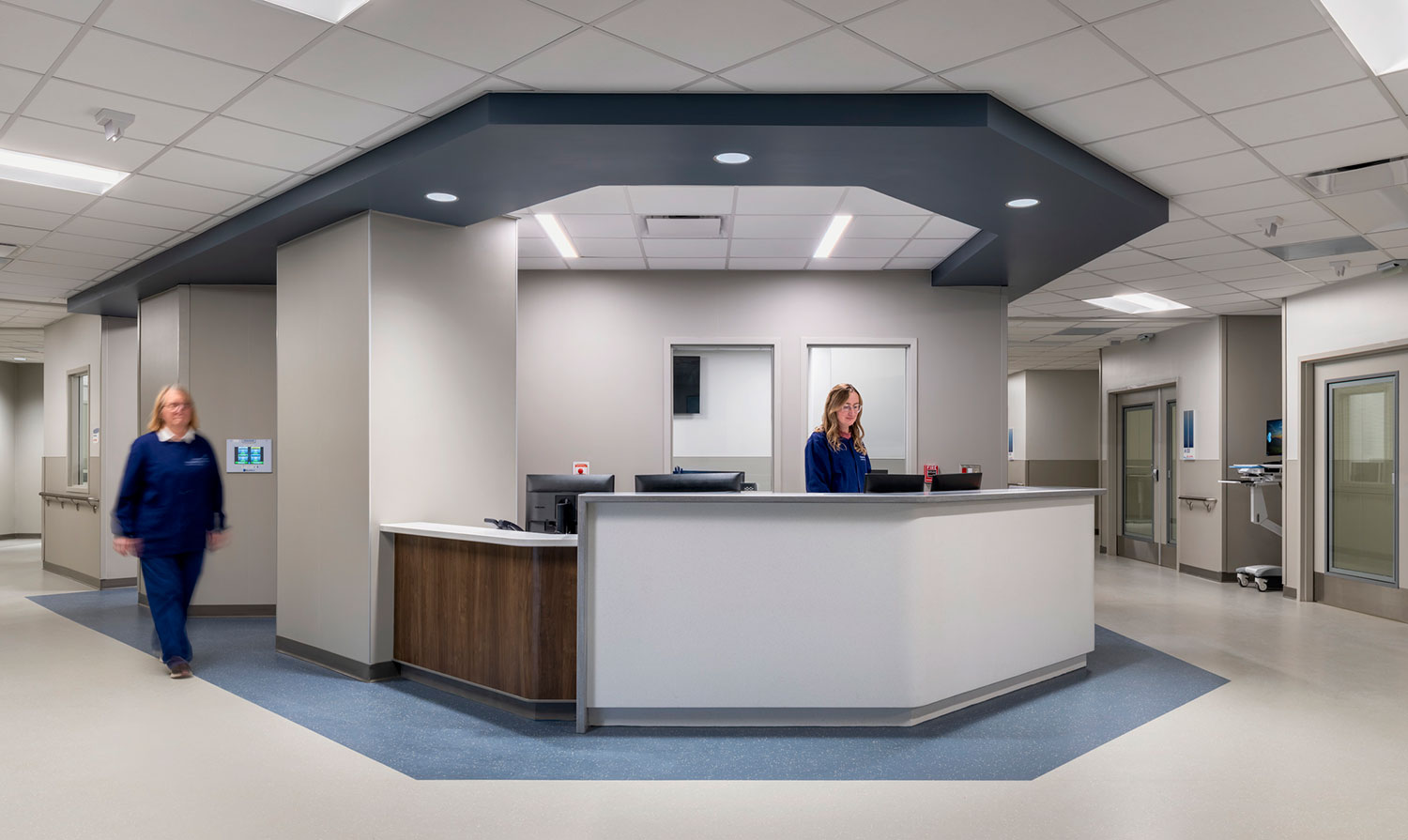
Several design elements were specifically included to reduce staff stress and improve wellness, including respite rooms near clinical departments, giving clinicians a space to decompress during demanding shifts. The pod-based ED layout provided dedicated areas for specific patient populations to help streamline workflows, as well as improve sightlines to enhance visibility and safety for staff. Oversized elevators were placed adjacent to helipads to minimize patient transport times, particularly for traumas, and support large care teams during emergencies.
These elements, while seemingly small, make a major impact. By reducing travel distances, improving safety and creating restorative spaces, the design directly addressed staff burnout and well-being.
Designing with data and feedback
In my experience, design decisions only succeed if they truly support the people who use the space. That’s why measuring outcomes through hard data and real-world feedback from users is critical to understanding the efficacy of design. By evaluating how spaces support workflow after opening, the team can gather data so each project builds on the lessons of the last and continues to evolve with the needs of the healthcare workforce.
- Pre- and post-occupancy evaluations help to measure improvements in efficiency, safety and wellness. Post-occupancy lessons learned from projects inform future work.
- Room mock-ups and user feedback sessions during design ensure spaces align with real workflows.
Balancing efficiency with wellness
As a nurse, I know that design choices affect more than patient outcomes. They shape the daily experience of the staff who deliver care, and the best facilities balance efficiency with wellness, ensuring that clinicians feel supported while managing demanding workloads.
In my current role, I’ve seen how valuable it is to involve frontline staff in the design process through user sessions, mock-ups and open dialogue. Their insights help create spaces that reduce burnout, strengthen collaboration and ultimately make it easier to focus on providing care to patients.
When clinicians feel empowered and equipped by their environment, healthcare delivery improves. Design, at its core, is about building spaces that care for the caregivers as much as the patients.